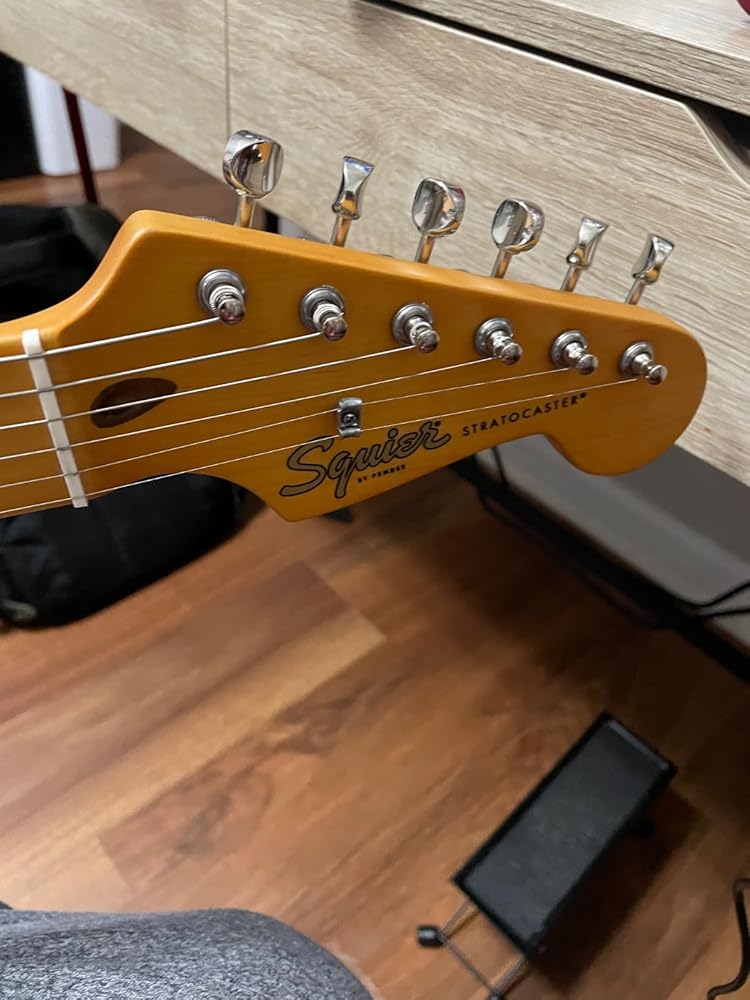
Musiclily Pro R15T-09 Left-Handed 6-in-line 14:1 Ratio Semi Closed Vintage Hybrid Style Locking Machine Heads Tuners with Oval Button for Fender Squier Strat Tele Style Electric Guitar
SKU MX3666NK
Original price
$34.86
-
Original price
$34.86
Original price
$34.86
$34.86
-
$34.86
Current price
$34.86
Availability:
47 in stock, ready to ship
- Fits left-handed Fender/Squier Strat/Tele style and other similar style electric guitar. Please check your old tuners size before you buy
- Shaft diameter: 6mm(15/64 inch), vintage style bushing outside diameter: 8.8mm(11/32 inch), NOT the modern 10mm(25/64 inch) peg hole, so if you try to install it to a modern 10mm peg hole guitar headstock, you will need a convert bushing to help
- Gear ratio 14:1, the retaining mechanism lock the strings in place, preventing them from slipping, improve tuning stability and make string changes much faster, turn smoothly and precisely, keep your guitar stays in tune
- Zinc alloy made, with great electroplated finish
- Package includes: 6pcs left-handed machine heads set (1+4+1) and mounting accessories